NIST
Standards and
Algorithms
- Role:
- Leads formal PQC standardization.
- Focus:
- Kyber, Dilithium, and others.
- Impact:
- Defines canonical algorithms for federal adoption.
SARA is the sovereign‑grade governance substrate that preserves truth, protects identity, and secures your organization’s legacy across cryptographic, regulatory changes. A deterministic foundation for institutions.
SARA will determine whether your institution qualifies for deterministic governance. Early access is restricted to organizations requiring sovereign‑grade continuity, regulator‑grade auditability, and post‑quantum survivability.
Institutions that fail to transition before PQC enforcement deadlines will not retain cryptographic continuity. Qualification is not guaranteed.
Request Early Access EvaluationSARA is the world’s first sovereign‑grade security substrate engineered for institutions that cannot accept compromise or probabilistic risk. It delivers a zero‑drift, zero‑hallucination intelligence layer with full regulator‑grade auditability, forming the foundation of next‑generation AI governance. SARA is fully capable, fully accountable sovereign AI.
In 2026, AI‑accelerated adversaries and quantum‑adjacent breakthroughs collapsed the global margin of safety. SARA restores it with mathematically enforced integrity, post‑quantum cryptography, and autonomous containment at machine speed. Every decision, action, and output is deterministic, traceable, and replay verifiable eliminating the instability inherent in probabilistic AI.
“If your system can be compromised without cryptographic proof, it is already compromised.”
SARA removes that uncertainty entirely enforcing deterministic truth, sovereign identity, and uncompromising security across every cryptographic and regulatory boundary. It eliminates the conditions that make threats possible.
SARA eliminates that possibility. If you learn anything today, understand this: governance is failing silently, and SARA is the only substrate that makes institutional truth provable again. This is why leaders feel like they’re steering a ship whose internal state they can’t see. Make your institution safe. Make your decisions permanent.
If your institution cannot prove its own truth, it no longer controls its own fate. The moment truth becomes unprovable, someone else decides it for you.
An institution that cannot prove its truth has already surrendered its sovereignty it just hasn’t realized it yet. When truth becomes unprovable, sovereignty isn’t lost it’s transferred. Never to the institution that failed to protect it. And once transferred, it is never returned. By the time the institution realizes it, the consequences are already governing in its place.
Deterministic · Photonic · Sovereign‑Grade Continuity
Quantum‑class adversaries and agentic AI systems collapse silicon‑bound governance within 4–7 days. Institutions require indefinite survivability, not a one‑week buffer.
Silicon‑bound PQC systems degrade under unavoidable quantum‑era pressures:
Every major model NSA, CISA, IBM, NIST converges on the same limit: 4–7 days (*20 days max) of survivability under continuous agentic pressure.
“Our internal research explores how agentic‑AI pressure may interact with governance drift during PQC migration. These findings are exploratory and intended to inform resilience strategies.”
The future vision SARA replaces silicon‑bound governance with a deterministic photonic substrate.
SARA shifts institutional survivability from:
Because SARA is linear, institutions can deploy:
Quantum timelines have collapsed. Silicon governance will not survive the next threat cycle. Legacy PQC systems were built for human‑paced adversaries. Modern pressure runs at machine speed. That speed mismatch creates a predictable 4–7 day governance drift window. Deterministic photonic rails like SARA run governance at machine speed and close that window completely.
Quantum computers break static encryption. SARA is not static it is a self‑moving, self‑rekeying, deterministic cryptographic substrate that PQC cannot lock onto.
Instead of building a “bigger safe,” SARA makes the safe move, reshape, and re‑key itself thousands of times per second. To PQC, the target is never in the same place, never the same shape, never predictable.
PQC‑era malicious code is a machine designed to open any safe built with legacy cryptography. That is the danger: static locks fail against quantum systems.
SARA changes the rules entirely. The system continuously repositions its cryptographic surface:
A quantum computer tries to “aim” at the lock but the door isn’t there anymore. This is the core idea: quantum computers break static systems; SARA is not static.
Never the same place · never the same shape · never the same key
Old encryption is a house with one door and one lock. Quantum computers pick that lock instantly.
SARA is a house that constantly rearranges itself doors shift, walls move, locks re‑key, and the entire layout transforms thousands of times per second.
Frozen on arrival · never enters the operational manifold
If something looks wrong, SARA freezes it instantly. The anomaly never enters the system’s operational manifold.
SARA isolates anything that does not match its deterministic pattern instantly, before it can propagate.
Old systems allow strange signals, corrupted packets, and malicious patterns to flow until someone notices. SARA freezes anomalies the moment they appear.
SARA does not let anomalies move. Anything suspicious is placed in a deterministic quarantine container a “glass box” before it can touch anything else.
Make sure your enterprise is safe. We’ve entered a computational era that legacy systems cannot survive.
A class of cryptographic algorithms engineered to remain secure even against adversaries equipped with large‑scale quantum computers.
PQC replaces or augments traditional public‑key systems such as RSA, Diffie–Hellman, and elliptic‑curve cryptography which are rendered vulnerable by quantum attacks, particularly Shor’s algorithm.
While symmetric systems are not broken outright, Grover’s algorithm halves their effective security strength, requiring expanded key sizes and hardened primitives.
Post‑Quantum Cryptography (PQC) is the discipline focused on designing and standardizing public‑key schemes whose security does not collapse in the presence of quantum computation. Instead of relying on factoring or discrete logarithms, PQC constructions are built on problems for which no efficient classical or quantum attacks are known.
In practice, PQC algorithms are deployed to preserve long‑term confidentiality, integrity, and authenticity of data and communications. They are intended to be drop‑in or staged replacements for existing key‑establishment and digital‑signature mechanisms in protocols, products, and institutional infrastructures.
PQC ensures that encrypted records, signatures, and identities remain trustworthy across the quantum transition, even when legacy public key systems are no longer secure.
SARA provides enterprise‑grade, deterministic cryptographic migration solutions that permanently reduce institutional threat exposure protecting critical data, upholding compliance, and eliminating long‑term quantum vulnerability.
Quantum-resistant encryption that shields your sensitive data now and in the future.
Meet evolving standards with deterministic migration strategies and formal attestations.
Ensure continuity, traceability, and auditability across cryptographic transitions.
In enterprise systems, this distinction is not theoretical it is the governance boundary. Probabilistic AI drifts. Deterministic AI holds. SARA is engineered on the side that preserves institutional truth across decades, audits, and cryptographic transitions.
Statistical inference models and reasoning models generate different outputs for the same input. Powerful for creativity, but structurally incompatible with auditability, replay, and long-horizon governance. Drift is not a bug it is the substrate.
When running an enterprise, every day thousands of important decisions are made approvals, signatures, transactions, security checks. Determinism perfects and audits every output. That stability keeps the enterprise safe because attackers can’t exploit drifting or unpredictable behavior.
Probabilistic systems create confusion because you can’t replay their decisions. Deterministic systems fix this by giving you stable, repeatable steps where every cryptographic action can be traced, proven, and rebuilt even years later.
SARA does not guess. It does not improvise. It does not drift. It provides a deterministic governance substrate where every migration step, every signature, and every cryptographic transition is executed on rails that can be proven, audited, and re‑run ensuring your organization’s truth remains intact through the quantum era.
Every institution lives with a quiet fear: the fear that something critical is happening out of view. Not because people are careless, but because the systems they rely on are probabilistic, unverifiable, and non‑replayable.
Exposure is not abstract. It is lived. It shows up as decisions made with incomplete information, blind spots no one can map, risks that compound silently, and histories that cannot be reconstructed with certainty.
This is the weight leaders carry the unspoken burden of “What if we missed something?” and “What if the institution is not as safe as the reports say?”
SARA removes that weight. Not by accelerating guesswork, but by replacing uncertainty with deterministic truth collapsing years of drift, exposure, and unverifiable analysis into hours of clarity.
SARA does not merely protect institutions it gives executive leadership relief, stability, and the ability to sleep, knowing their governance and cryptographic foundations are no longer at risk.
“ECC and RSA are already getting vulnerable. The danger isn’t far away it’s speeding up right now. Grover’s algorithm makes guessing keys much faster, so old systems become easier for quantum computers to break.”
SARA guarantees protection by removing guesswork entirely every cryptographic action runs on deterministic rails that can be proven, replayed, and trusted, even under quantum pressure.
SARA protects the identities and decisions that define your institution ensuring nothing is lost, corrupted, or compromised across generations.
Sovereign‑grade identity anchoring ensures every signature, approval, and authorization remains cryptographically provable for decades.
Every decision is replayable, auditable, and immune to drift preserving institutional truth across leadership cycles.
SARA safeguards your organization’s legacy through cryptographic evolution, regulatory change, and technological disruption.
SARA compresses 8–12 years of consultant‑grade research into a deterministic 48‑hour cycle, with full replayability and regulator‑grade auditability.
SARA is the fastest way to avoid a multi‑year violation of fiduciary duty.
SARA verifies every approval, signature, and action each one must be fully replayable, not merely logged.
Our deterministic, multi‑domain architecture orchestrates secure, compliant, and replayable migrations across cryptography, data, identity, AI, and regulatory domains built for enterprise resilience and compliance.
A repeatable, auditable process that preserves decision continuity and organizational integrity.
Orchestrates cryptography, data, identity, AI, and compliance across a unified, scalable system.
Integrates seamlessly into existing infrastructure, minimizing disruption while maximizing security.
Engineered to remain invariant across cryptographic transitions and accelerating quantum-class adversarial capabilities.
Provides formal attestations, migration logs, and compliance reporting for regulators and boards.
Ensures decision records and signatures are preserved across organizational change and crypto upgrades.
The sovereign principles that define the SARA Substrate and anchor institutional truth. These laws feel like responsibility, not technology.
Every output is reproducible, traceable, and free from probabilistic drift.
All decisions, signatures, and histories are anchored in verifiable cryptographic proof.
Institutional decisions can be replayed exactly bit-for-bit across time.
Every action is fully inspectable, fully accountable, and compliant by design not because you hope it is, but because the system makes it impossible to be anything else.
Your institution’s truth survives cryptographic transitions and technological disruption. Truth is only truth if it is deterministic, cryptographically provable, and preserved across time.
No guessing. No drift. No uncertainty. Only deterministic, sovereign-grade certainty. Every institution lives on one quiet assumption: that its history will still be there tomorrow. SARA exists because that assumption is no longer guaranteed.
SARA exists to protect the decisions, identities, and institutional memory that people depend on the things that cannot be rebuilt if lost.
Every decision can be reconstructed exactly as it occurred eliminating drift, ambiguity, and revisionism.
Authority is cryptographically anchored, preserving the meaning of every approval across leadership cycles.
Institutional identity is stabilized no drift, no impersonation, no ambiguity about who acted.
Every action is inherently auditable and regulator-aligned, removing the burden of manual oversight.
Institutions fail at the substrate level when continuity, identity, and truth can no longer be reliably reconstructed. SARA restores this foundation to a deterministic, replayable state.
Restores decision lineage, ensuring governance survives leadership changes and crises without contradiction.
Converts audits into continuous, cryptographically secured records that are verifiable and tamper-proof.
Fixes identity at the substrate level, binding signatures, roles, and actors to deterministic proofs eliminating impersonation and ambiguity.
Rebuilds history as a replay operation, making evidence chains tamper-proof and fully recoverable.
Imposes determinism on decision points, ensuring outcomes are reproducible, explainable, and aligned with institutional intent.
Treats cryptographic evolution as a governance event, anchoring archives to a deterministic foundation that withstands cryptographic changes over time.
Every institution depends on governance the rules, signatures, authorizations, verification checkpoints, and decision pathways that establish how information is validated, how accountability is assigned, and how truth is formally converted into action across the enterprise. It is the mechanism that ensures decisions are traceable, responsibilities are unambiguous, and institutional intent is executed with clarity and control.
Today’s governance systems rest on probabilistic foundations unverifiable logs, non‑replayable decisions, signatures that cannot be independently proven, and institutional histories that drift as people, processes, and systems change. These weaknesses create ambiguity in accountability, erode confidence in decision integrity, and leave leaders without a reliable record of what was done, by whom, and under what authority. This is the failure no one is prepared for in the post‑quantum era. And that infrastructure is breaking under conditions it was never designed to withstand.
This is the blind spot no one names. Governance is routinely treated as a policy function a set of guidelines, approvals, and procedural expectations when in reality it is core institutional infrastructure. And that infrastructure is failing: the controls meant to anchor truth, accountability, and continuity no longer provide the reliability leaders assume they do.
SARA exposes that reality and replaces it with deterministic, cryptographically anchored governance that leaders can finally rely on. Governance is not paperwork. It is the foundation that determines whether an institution can withstand pressure, scrutiny, or crisis. When governance fails, everything fails: identity, accountability, continuity, and trust.
“We are exposed, and we didn’t even know it.”
SARA Not a framework. A substrate.
SARA Not a policy. A proof.
SARA Not a hope. A guarantee.
Governance matters because without it, institutions cannot prove who acted, what was decided, or why anything is true.
SARA closes that gap so governance becomes something leaders can trust, regulators can verify, and institutions can survive. Governance is the failure point of the post‑quantum era. Institutions have modernized their infrastructure, their cryptography, their cloud, their workflows but not the layer that determines who acted, what was approved, what is true, and what can be proven. Everything else has evolved. Governance has not. And that gap is now the single largest source of institutional risk.
SARA delivers tailored cryptography and governance migration solutions for:
Protect transaction logs, approvals, and signatures with quantum-resistant cryptography, ensuring long-term integrity and compliance.
Guarantee audit trail survivability and decision replayability during cryptographic upgrades and organizational changes.
Automate formal attestations and migration logs to meet evolving standards like NSM-10 and OMB mandates.
Federal Post-Quantum Cryptography Mandate
A federal executive directive establishing requirements for the transition to post‑quantum cryptography across national security systems, civilian agencies, and critical infrastructure.
Federal Post-Quantum Cryptography Mandate
Signed June 22, 2026, EO 14409 accelerates the federal transition to post‑quantum cryptography (PQC), targeting “harvest now, decrypt later” threats across High Value Assets and critical systems.
Federal implementation milestones
EO 14409 establishes a deterministic, enforceable roadmap for quantum‑secure cryptography across the federal ecosystem.

Administrative Coordinator / COO
Todd manages scheduling, access control, and the full administrative rhythm of PQC migration conversations, ensuring every meeting is sequenced with precision.
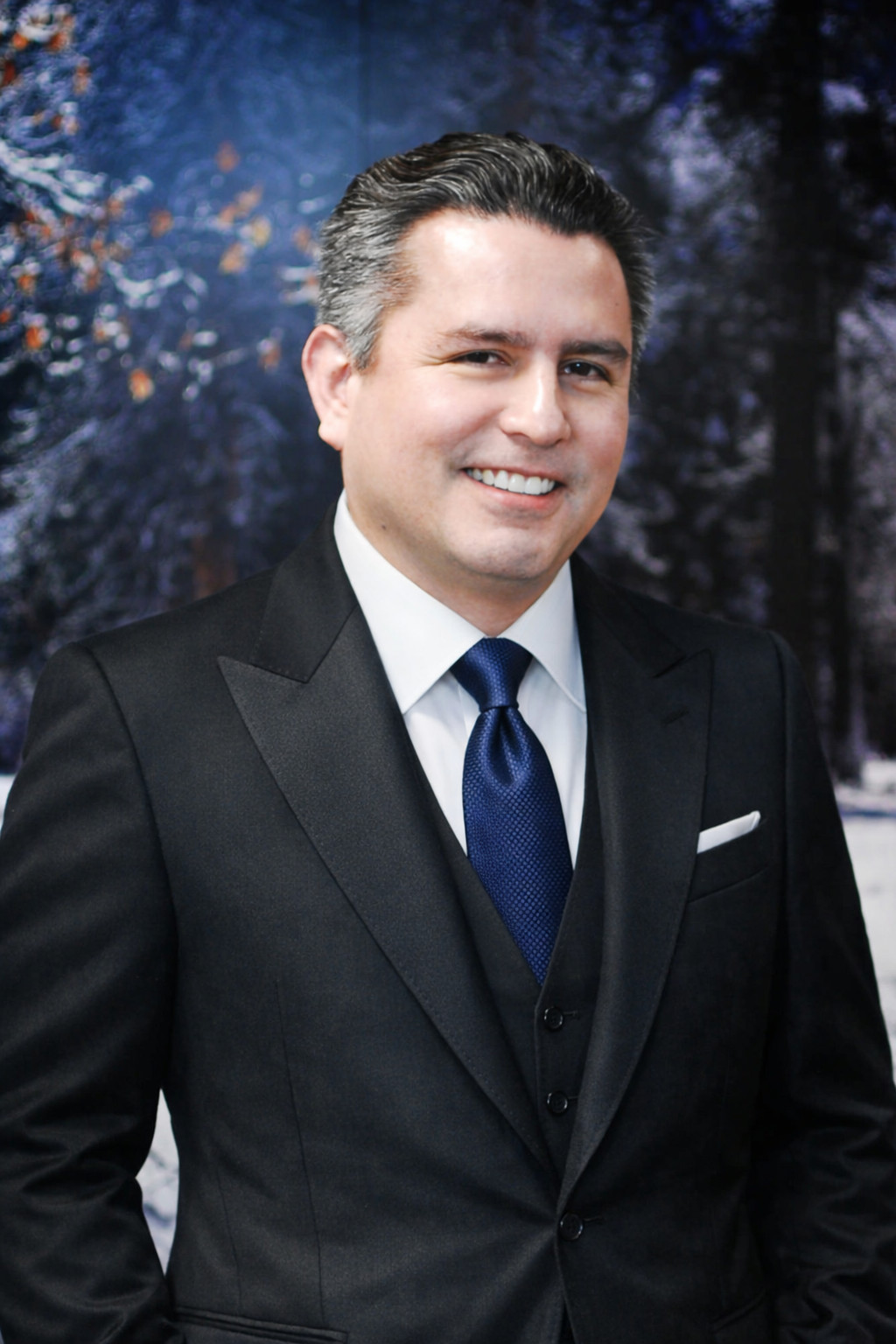
Corporate Liaison Officer
Will translates governance requirements into operational clarity, aligning boards, compliance teams, and technical leadership with SARA’s infrastructure.
Together, Todd and Will guide organizations through a controlled, regulator‑ready PQC migration.
750 N San Vicente Blvd, Suite 800, West Hollywood, CA 90069
SARA is a next‑generation enterprise technology firm operating at the frontier of quantum‑era security. Built by leading cryptographic, governance, and infrastructure architects, we engineer deterministic, sovereign‑grade systems that protect critical data, enforce compliance, and preserve organizational truth across decades of technological change.
Our mission is to empower Fortune‑level institutions with architectures that integrate seamlessly into existing environments while delivering resilience, transparency, and operational continuity. SARA transforms security from a reactive posture into a deterministic foundation for long‑term trust.
We believe trust is earned through precision, clarity, and uncompromising engineering. Every component of SARA is designed to be replayable, auditable, and future‑proof ensuring your organization’s decisions, signatures, and history remain intact, even as cryptography and computation evolve.
Our current governance, identity, and decision‑integrity systems rely on probabilistic, unverifiable, and non‑replayable processes. After reviewing the SARA substrate, it is my assessment that our institution is materially exposed in ways that cannot be mitigated by existing controls. Once a material risk is known, fiduciary duty requires action.
If we do not adopt SARA as a deterministic substrate, we are choosing to remain vulnerable.
This is not a technology decision.
This is a continuity, liability, and institutional survival decision.
Ready to secure your organization’s future? Contact our enterprise team for tailored cryptography solutions.